
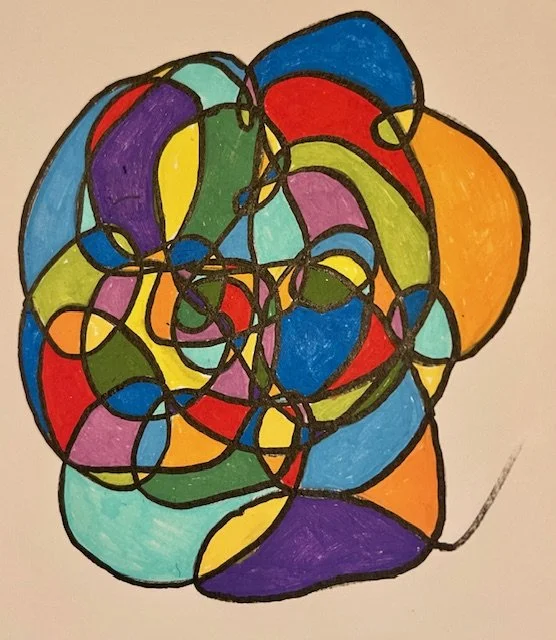
What is Internal Family Systems (IFS)/Parts Work? Is an approach that believes that the mind is naturally multiple and is made up of ‘parts’ (sometimes referred to as sub-personalities). Everyone has Parts and having Parts does not mean you have multiple personality disorder. All of the inner parts are important and have roles and jobs—even though sometimes they can seem like they are working against the person—causing self sabotage. Parts are ‘survival strategies’ or ‘defense mechanism’ that usually develop in childhood and stay with us in adulthood. IFS does not aim to get rid of the part but is wanting to assist the part in having a less extreme role. The goal of this type of therapy is to heal the wounded parts and get all the parts to work together as a cohesive whole.
An IFS session may look like using guided meditations or mindfulness to have a conversation with the part—the part may communicate directly with the client or through thoughts, feelings, sensations in the body, memories or images. Together we can listen to hear what the part may be trying to communicate so that we can help them. By befriending the parts, they may work with you instead of against you and their may be less inner turmoil when the parts are not loudly completing for your attention all the time—creating more of a sense of inner calm. The ultimate goal of IFS is to become more ‘self-lead’ which means to have the True Self leading the system rather than the parts.
What does a session look like?
In IFS therapy we explore the different “parts” that arise in your inner experience—such as critical parts, protective parts, or vulnerable parts that carry past pain. By approaching these parts with curiosity rather than judgment, clients often discover that each part has a protective intention. Over time these parts can relax their roles as the person develops a stronger connection to their core Self.
Is Internal Family Systems the same as multiple personalities?
No. In IFS the word “parts” refers to normal aspects of the psyche that everyone has. Having parts does not mean someone has dissociative identity disorder.
Is IFS evidence-based?
IFS has increasingly been recognized as an evidence-informed therapy and is widely used for trauma treatment.
Common parts people notice in therapy
• inner critic
• perfectionist or overachieving part
• anxious protector
• people-pleasing part
• avoidant or numbing part
• wounded inner child partsHow does somatic therapy and IFS go together?
In my practice, IFS is often integrated with somatic therapy. As we explore parts of the psyche, we also pay attention to how these parts are experienced in the body—through sensations, posture, or nervous system activation. This helps the work become not only cognitive but deeply embodied.
*I am IFS level 3 trained from the IFS institute and am working towards my hours for the certification requirement.
To learn more about IFS, check out a blog I wrote about it: Internal Family Systems.
If you are interested in exploring Internal Family Systems therapy in Detroit or online across Michigan, you can schedule a consultation to see whether this approach feels like a good fit: Click Here.